From the first time I met Jamie as a 12 year old pediatric stroke survivor struggling to maintain hope, right up until present day when we met up for a coffee, I’ve always been so impressed how Jamie handles her ‘mental game’ with such maturity. -David Dansereau
Background: I’ll be sharing her full story in my book Closure After Stroke but I wanted to give you a sneak peek here on how Jamie maintains hope and overcomes obstacles in survivorship. The following is an excerpt from my book with some of the tips she shared with me over the years during our book interviews, during the time we spent working together in pediatric stroke advocacy and in the early days helping her with her rehabilitation.

Jamie’s songs that resonate with her in reflecting on her journey:
🎶 Miley Cyrus- ‘The Climb’
🎼 Jonas Brothers- ‘A Little Bit Longer’

Before we dive in, did you know you can listen to this article on the Substack app?

🏒Now, let’s meet Jamie
The Nightmare on the Ice and How we Connected
For Jamie Coyle, “luck” was the defining rhythm of her childhood growing up in my hometown of Cumberland, Rhode Island. She was the rising hockey star who started skating at age 3, with the golden touch—’the girl who won virtually every raffle she entered’ and scored game-winning goals just as the buzzer sounded. By age 12, Jamie was a top-tier athlete wearing the #7 jersey, her eyes fixed on the Olympic stage. She would often tell me she felt invincible on the ice, as if she could sense the puck’s path to the net before it even left her stick.
That charmed trajectory met a bone-chilling end on August 9, 2008. During a tournament in Marlborough, Massachusetts, after scoring two goals, Jamie was struck by a massive headache. Her voice began to vanish. When she tried to take her turn on the ice, her body betrayed her and she collapsed. In an instant, the “luckiest girl in the world” was facing a life-threatening medical crisis: a pediatric stroke.
Jamie’s journey, chronicled in her book The Luckiest Girl in the World, is more than a survival story. It is a masterclass in resilience and a call to action for better health education and stroke awareness in communities and in the schools. Here’s the testimonial I left on Amazon for this important book.
The Luckiest Girl in the World is a Winner
Recovery from stroke is a lifelong journey full of many ups and downs. Any survivor or caregiver will tell you that, and too often many simply stay down and accept a life that has changed. Instead, The Luckiest Girl in the World shows any survivor or person facing obstacles how to take on a challenge and come out a winner. Jamie provides a very mature and hopeful account of her stroke recovery, and guides the reader through both the physical and emotional stages (of stroke recovery) which even many adult survivors have trouble discussing. Her book and all the valuable lessons it includes should become a “must read” for all students to improve stroke education in the schools and foster better communication and understanding about brain injuries.- David Dansereau | SmartMovesPT
Sidebar: When I first heard of Jamie’s story, I admit I was brought right back to the ice when I was 17 and had my own health scare, a TIA, that was missed by a coach that did not know the stroke warning signs. I released this chapter, Power Play from my book earlier here on Substack.

You’ll be meeting Jamie and learning more soon on my deep dive in my Closure book, but here are five impactful lessons from her recovery I want to share with you now!
Takeaway 1: Stroke is Not a Disease of “Old Age”
The most dangerous myth about stroke is that it is reserved for the elderly. Jamie’s experience shattered this misconception, highlighting the reality that pediatric stroke occurs at alarming rates, and young women are at a significant, often overlooked risk.
Public perception is frequently misaligned with clinical reality. While national awareness efforts often focus on other high-profile illnesses, the mortality statistics for women and strokes are staggering.
“Perhaps you didn’t know—Stroke KILLS more than twice as many American women each and every year as breast cancer.” — David Dansereau, MSPT
This “surprising” fact exists because the young faces of stroke rarely receive the same national support or corporate partnerships as other health missions.
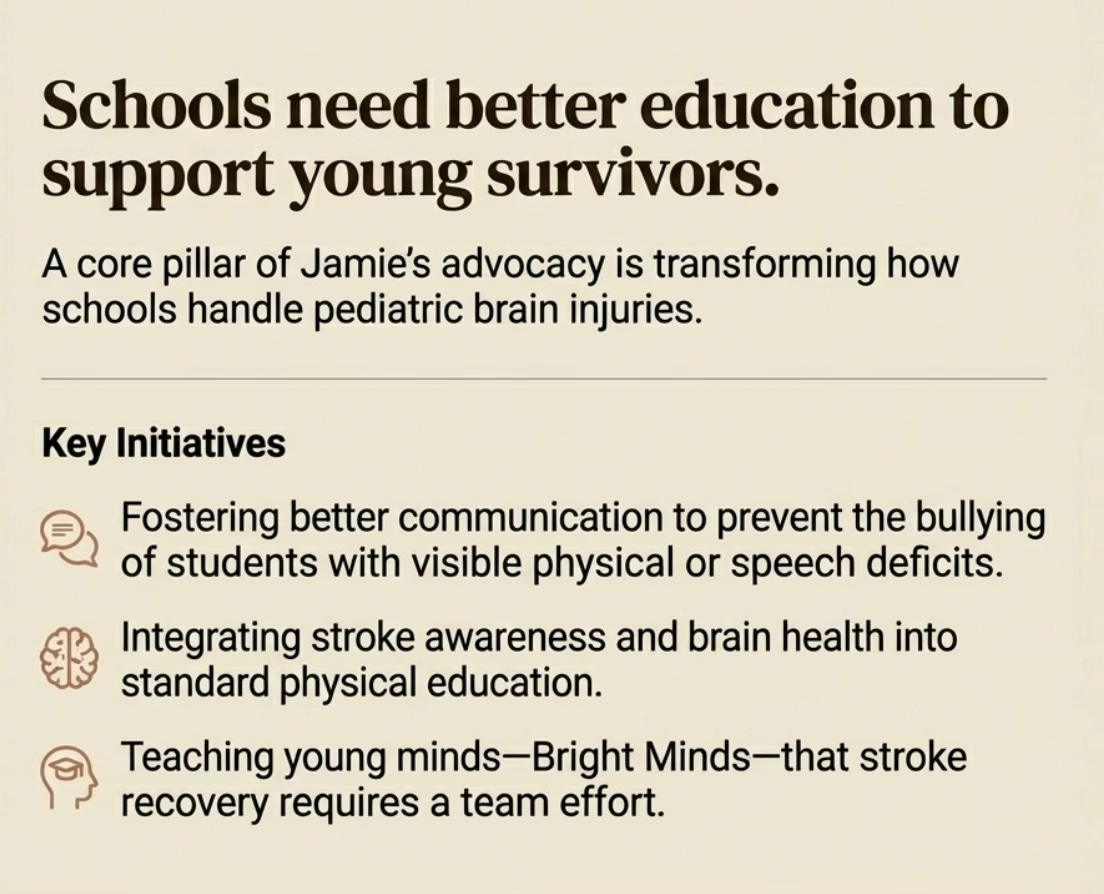
Did you know? Jamie’s story inspired some of my early Bright Minds advocacy work which aimed to ensure that medical professionals and the public alike stop using youth as a shield against a diagnosis.
Takeaway 2: The Danger of the “Recognition Gap”
Because no one suspects a stroke in a 12-year-old, a “recognition gap” often occurs, leading to catastrophic delays in treatment.
Jamie’s symptoms were textbook:
A sudden, severe headache, loss of speech, and physical collapse.
Yet, because of her age, the reality was the furthest thing from the observers’ minds.
These initial delays nearly cost Jamie her life. Her story underscores a grim reality: only 1 in 6 people can name the three most common warning signs of a stroke. Early education in schools is paramount, not just for symptom recognition, but for survival.
If coaches, teachers, and students are trained to spot the signs, we can close the window on misdiagnosis and give children a fighting chance at a full recovery. Much, much more on this in my book!
Takeaway 3: Recovery is an Athlete’s Game
Jamie’s greatest asset in rehabilitation was her “Athlete’s Mindset.” She treated her recovery with the same grit she used to dominate the ice. This connection to the sports world was solidified when I was able to introduce her to my own stroke mentor NFL legend and fellow stroke survivor Tedy Bruschi.
Bruschi, who also suffered a stroke due to a PFO, recognized a kindred spirit in Jamie when they met at the finish line in Boston (spoiler alert, you’ll have to buy Jamie’s book or preorder my book for details but I will share below part of what Jamie had to say in her book dedication about both Tedy Bruschi and I being her stroke heroes.
By the way, if you are wondering Tedy tells me his comeback song is:
🎶 Phil Collins- ‘Take Me Home’
You’ll be hearing more about stroke survivor Tedy Bruschi in my book chapter on ‘Finding Your Team’.
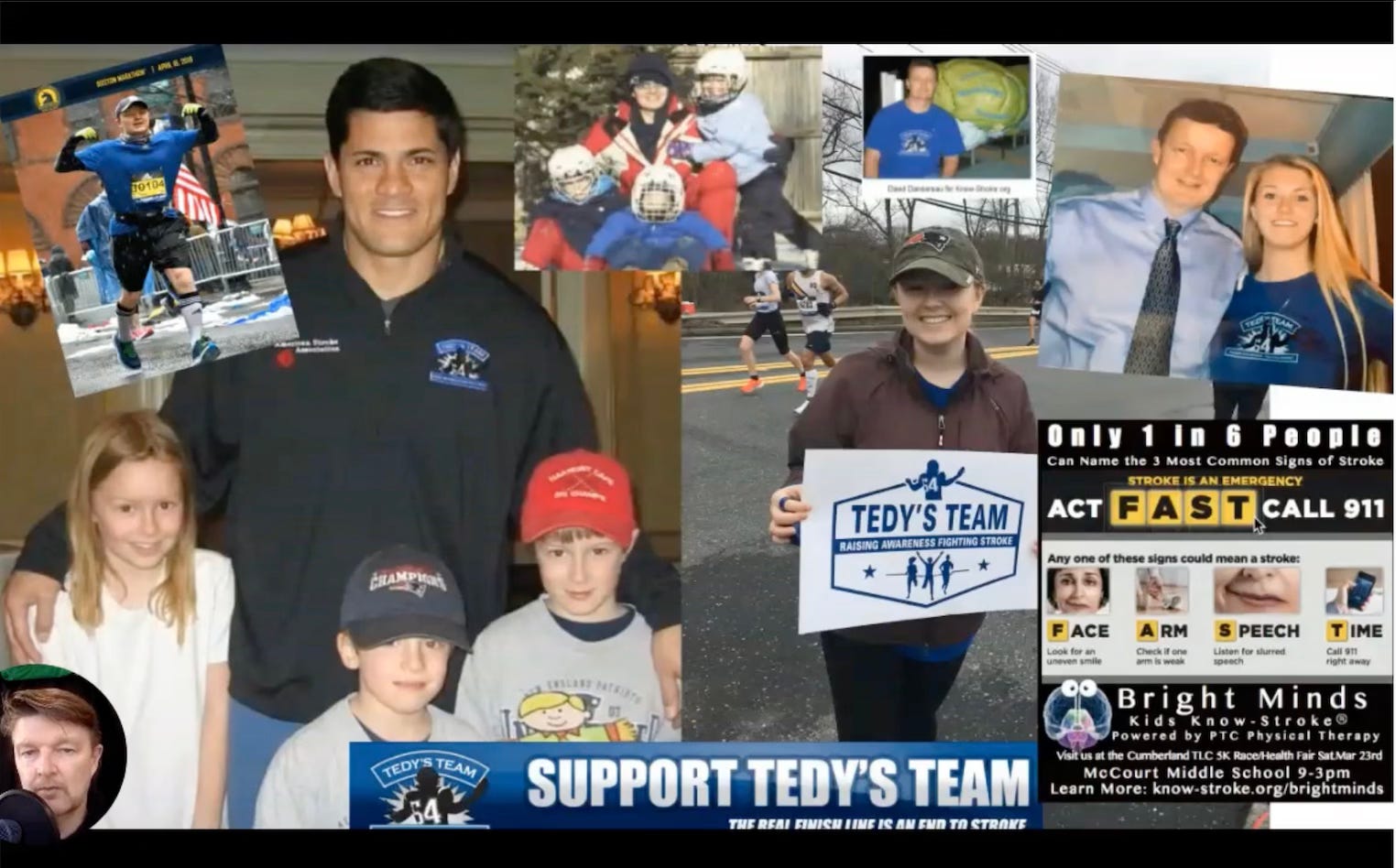

The bond between survivors and advocates is simply incredible. I would ultimately run the Boston Marathon with Jamie’s #7 jersey number on my shirt, and gifted her my finisher’s medal. I really feel sharing this “team” approach and community with Jamie early in her recovery and with my connection with Tedy’s Team allowed Jamie to pivot her competitive drive.
While she could no longer play hockey at an Olympic level, with lots of hard work and a ‘Never Give Up’ athletes mindset, we eventually got Jamie back on the ice again as a team effort. She explains this process so well in her book and she even began paying it forward and teaching skating and hockey skills to students with autism.
I also don’t think all these connections happen by chance, I BELIEVE there is a higher power lifting stroke survivors up and connecting us when we need it most.
-David Dansereau
Here’s just one example from Jamie’s book in her own words ( beginning on page 73 ) explaining how we first met.
“David Dansereau is a physical therapist and nutritionist who read about what happened to me in a local newspaper shortly after my stroke. By chance, he also had a story in the same paper that week and it happened to be about his involvement with New England patriot Tedy Bruschi and the football player’s own stroke awareness and advocacy organization, Tedy’s Team. David’s story was on page 7 (my hockey number), but when he picked up the paper he saw a picture of me on the front page with the headline, ‘Young Hockey Player Suffers Stroke’. He immediately contacted my coach, who had submitted the story, then rushed over to the hospital. He brought an autographed copy of Tedy Bruschi’s book, Never Give Up, My Stroke My Recovery and Return to the NFL with him and gave it to me. David sat and talked with me and my family for a long time. David and I immediately hit it off and developed a special bond. He happened to be a former hockey player himself, as well as a two time stroke survivor, his first coming at 17. Incredibly, he was also playing hockey when he suffered a stroke and collapsed on the ice.”- from the Luckiest Girl in the World book
Takeaway 4: The “Invisible” Battles (PTSD & Mental Health)
While a limp or a weak right side are visible markers of injury, the “invisible” wounds—PTSD, anxiety, and depression—are often the heaviest to carry. Returning to high school was a unique agony for Jamie. Because she didn’t “look” sick, she faced severe bullying and “evil” comments from peers who didn’t understand her invisible struggle.
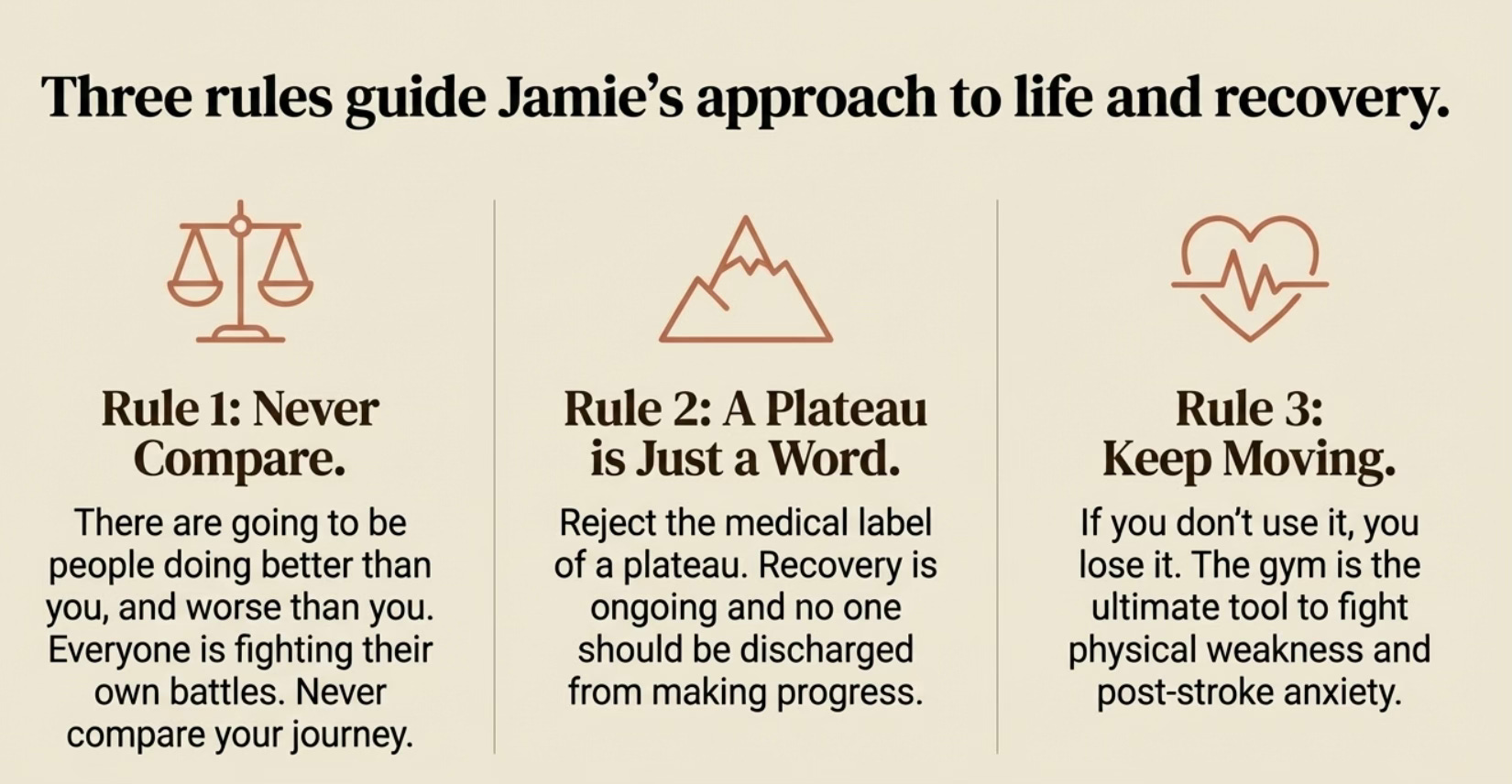
The pressure to “look normal” and the trauma of the event led to severe PTSD. Jamie’s core advice for navigating this emotional minefield is a mantra for all survivors: “Never compare.”
Comparing your current self to your pre-stroke self, or your progress to someone else’s, is a trap. Advocacy in schools is essential to prevent this type of bullying and to foster an environment where mental health is treated with the same urgency as physical therapy.
Takeaway 5: Defying the “Plateau” with the Gym as Medicine
In the clinical world, patients are often told they have reached a “plateau”—a point where progress supposedly stops. Both Jamie and I vehemently reject this term, viewing it as a systemic hurdle used by insurance companies to justify discharging patients.
We believe recovery is lifelong and that movement is the ultimate prescription. For Jamie, the gym became her sanctuary and her pharmacy. Consistent physical activity remains today the best defense against both the physical weakness of her right side and the creeping shadows of depression.
“Just go [to the gym] even when you don’t feel like it just go because it will pay off... It’s the best medicine.” — Jamie Coyle
Redefining the “Luckiest Girl” and what I hope you’ll learn from Jamie
Jamie Coyle’s mission has evolved from surviving a nightmare like we all face as stroke survivors, to lead by example on how you can manage your own mental game in recovery.
Today, as a successful young adult, you’ll hear more when I update her story in my book. She is pursuing her own career and managing her life with the mantra “Stroke Survivors Never Quit” and serving as an inspiring example for others, and hopefully providing a lifeline for survivors to share their stories too.
The title of her book, The Luckiest Girl in the World, is a profound paradox but so fitting when you get to know Jamie. She didn’t find luck in escaping tragedy, but in the higher purpose the tragedy revealed.
By losing her Olympic dream, she found a voice that I believe now saves lives and heals spirits.
My Bottom Line and Final Ponder Point:
If a 12-year-old athlete can be struck down by a stroke, are you prepared to be the advocate who recognizes the signs, or will you fall victim to the “recognition gap”?
Education is the first step toward resilience.
It’s why I am sharing Jamie’s story today here, and in my book to go to print soon, along with other inspiring stroke survivors I’ve met on my journey to closure after stroke.
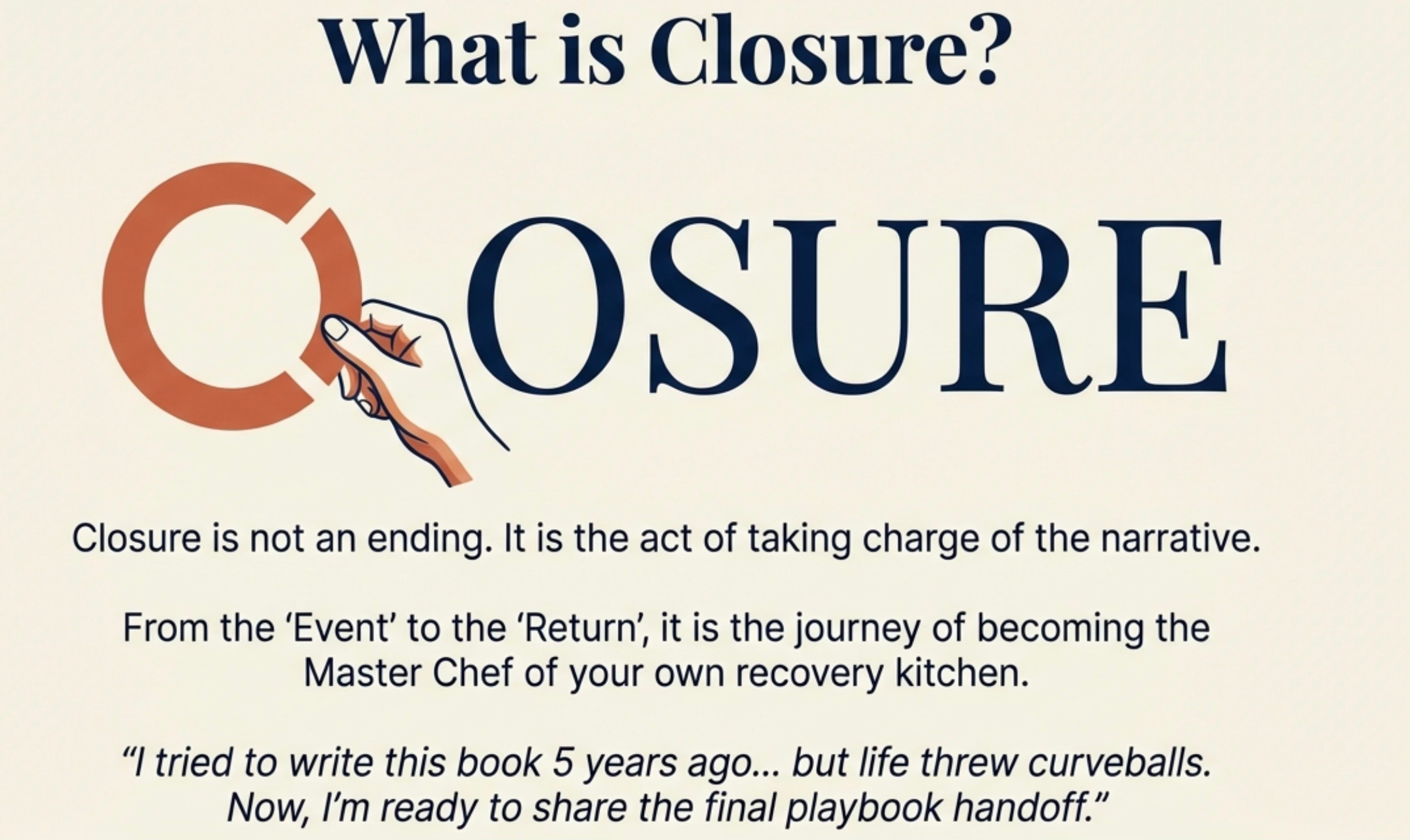
I hope this helps you take charge of your own narrative and mindset.
Please comment and share below if it helped you.