

The Stroke Recovery Puzzle
Building a Recovery Plan without a Road Map is Like Trying to Build a Puzzle Without the Box Cover

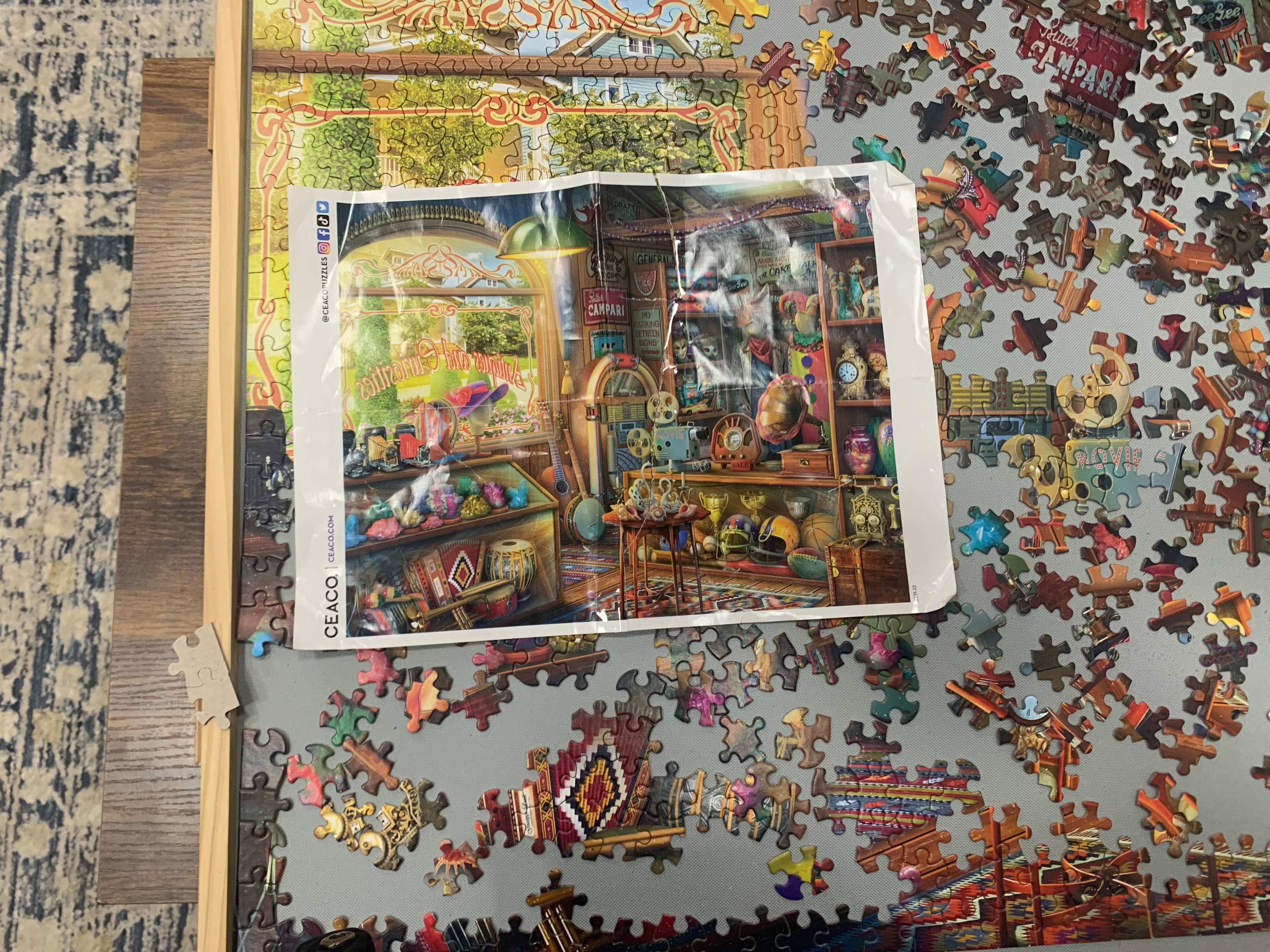
Reflection from my office inspired while taking a work break and adding a few pieces to a community puzzle in progress in the waiting room. Image in this article
Based on an upcoming chapter in my new book, Closure After Stroke
The Stroke Recovery Puzzle
Recovery after a stroke is not a straight line. It is not a checklist. It is not a single therapy session, medication, or surgical procedure like I had to close my PFO. That was only one piece of the puzzle in my stroke recovery.
The reality is stroke recovery is a complex puzzle. I’ve lived it as a stroke survivor, but also see the barriers in recovery as a physical therapist and have written about the pitfalls in the current reimbursement model and the slinky effect that happens when access to ongoing rehabilitation stalls.
And the stroke recovery puzzle is not the kind with twenty large wooden pieces made for a child. It is the thousand-piece puzzle dumped onto a desk at the end of a long day — colors scattered, edges hidden, patterns unclear. And it can be dumped on you at any moment, no matter how young or old you are, or how much money you possess or don’t.
Regardless, the puzzle will be there for you to figure out, and every 40 seconds in the US another puzzle is opened when the next person has a stroke.
And Yes, at first glance, that puzzle can feel impossible.
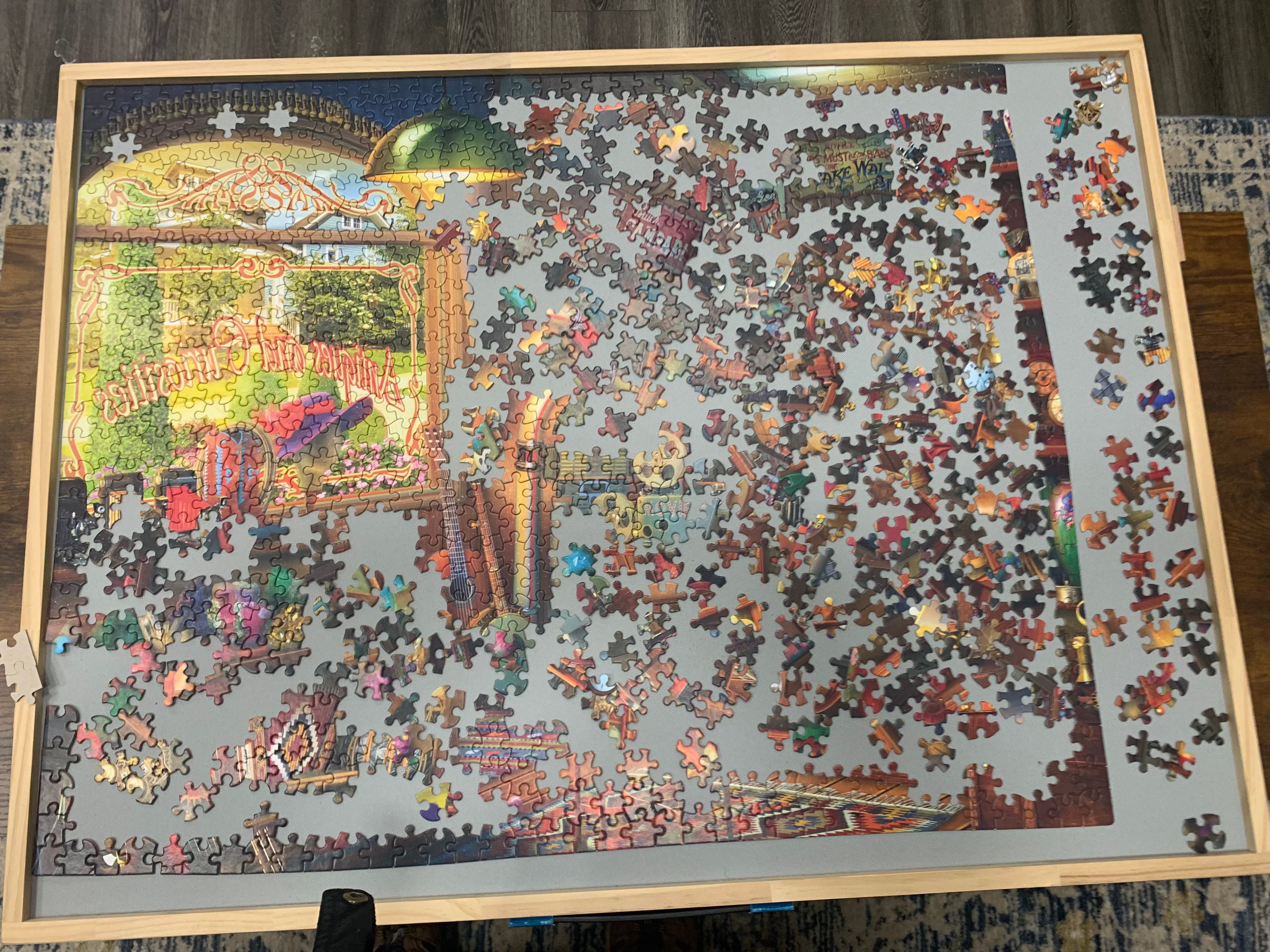
The Moment the Box Is Opened
When someone survives a stroke, the box is opened.
The pieces spill out across the table:
Weakness on one side
Speech difficulties
Fatigue
Emotional swings
Fear
Financial pressure
Identity disruption
Family stress
Return-to-work uncertainty
The Stigma of stroke by society
All of it arrives at once.
The first reaction is often overwhelm. Survivors and families stare at the table and wonder, ‘How will this ever come together?’
What they don’t yet realize is that puzzles are never solved by starting in the middle.
They begin with the frame.
Framing the Borders: The Early Roadmap
In puzzle-building, the first step is always the border. The edges create structure. They define what is possible. They turn chaos into something measurable.
In stroke recovery, the borders are:
Acute medical stabilization
Clear diagnosis and education
Early rehabilitation
Safety planning
Family engagement
Return to work support
A longitudinal plan with ongoing secondary prevention education
Social engagement and stroke support organization involvement
Without borders, pieces float aimlessly
Without a roadmap, survivors stall. I know this all too well as it happened to me.
This is where the healthcare system often falters. Too frequently, survivors are discharged with fragments of care but no picture on the box — no clear image of what recovery could look like, no long-term roadmap guiding the assembly. It is why I am writing my book, Closure After Stroke to share some of my recovery recipes as a worked through my own puzzle.
Imagine trying to complete a 1,000-piece landscape puzzle without ever seeing the cover image.
You might start strong. But eventually, frustration creeps in.
And frustration leads to quitting.
“One of the hardest things to do is change behavior.”
That phrase sits at the center of the stroke recovery puzzle. Especially today, when I sit for a few moments and work on a few pieces of the puzzle in our co-work space during my work day.
I have to quiet my mind to reflect and remember where I was in my own early days as a stroke survivor. At times, I still have to work to tell myself ‘I have time for this’ when other parts of my brain are saying, move on to the next task to get my business ‘to do check list’ completed instead.
But, what I’ve learned in recovery is you need to make the time to change behaviors simply because stroke demands behavioral change on a massive scale.
For example:
Taking medications consistently
Adopting new exercise habits
Committing to repetitive, sometimes boring rehab exercises
Changing diet
Improving sleep
Reducing stress
Asking for help
Slowing down
Accepting a new normal
And here’s the deeper truth: after a stroke, recovery requires investing time and energy into physical rehabilitation precisely when life feels most unstable.
Bills still need to be paid. Children still need rides. Your family pet still needs attention. Work expectations still loom. Aging parents still depend on you.
Choosing to spend an hour doing therapy exercises instead of answering emails or handling family logistics is not just a clinical recommendation — it is a behavioral decision.
And behavior change is hard even under ideal conditions because we humans tend to take the path of least resistance.
After neurological injury, it is monumental.
The Missing Pieces Problem
Sometimes the puzzle cannot be completed because pieces are missing.
In stroke aftercare, missing pieces might include:
Inadequate outpatient therapy
Poor transition communication between hospital and home
Lack of transportation
Depression left untreated
Cognitive deficits unrecognized
Caregiver burnout
Financial barriers
You can work diligently. You can try your hardest. But if critical pieces are absent, progress stalls.
This is not a failure of willpower.
It is a systems problem.
Stroke recovery requires coordinated care across disciplines — and across time.
The Power of Many Eyes on the Puzzle
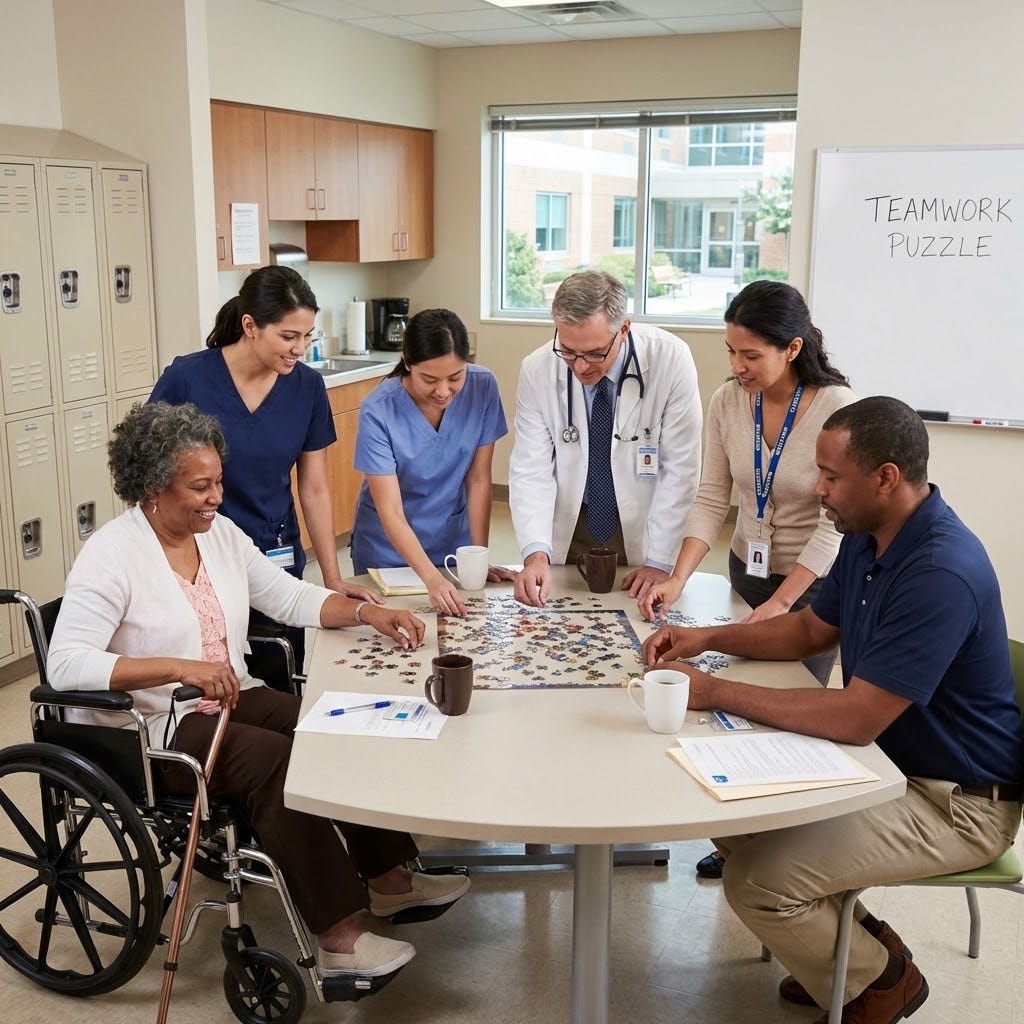
Back to my office example, that large complex puzzle is open on a table in the waiting room. Anyone walking by can stop and add a piece.
What started as an overwhelming scatter of shapes slowly began to take form — not because one person sat there endlessly, but because many eyes scanned the table over time, yet the cover of the box with the image remained the same.
Here’s the cool part-Different people noticed different patterns:
One recognized color gradients.
Another saw subtle shape differences.
Someone else instinctively found edge connectors.
Stroke recovery works the same way
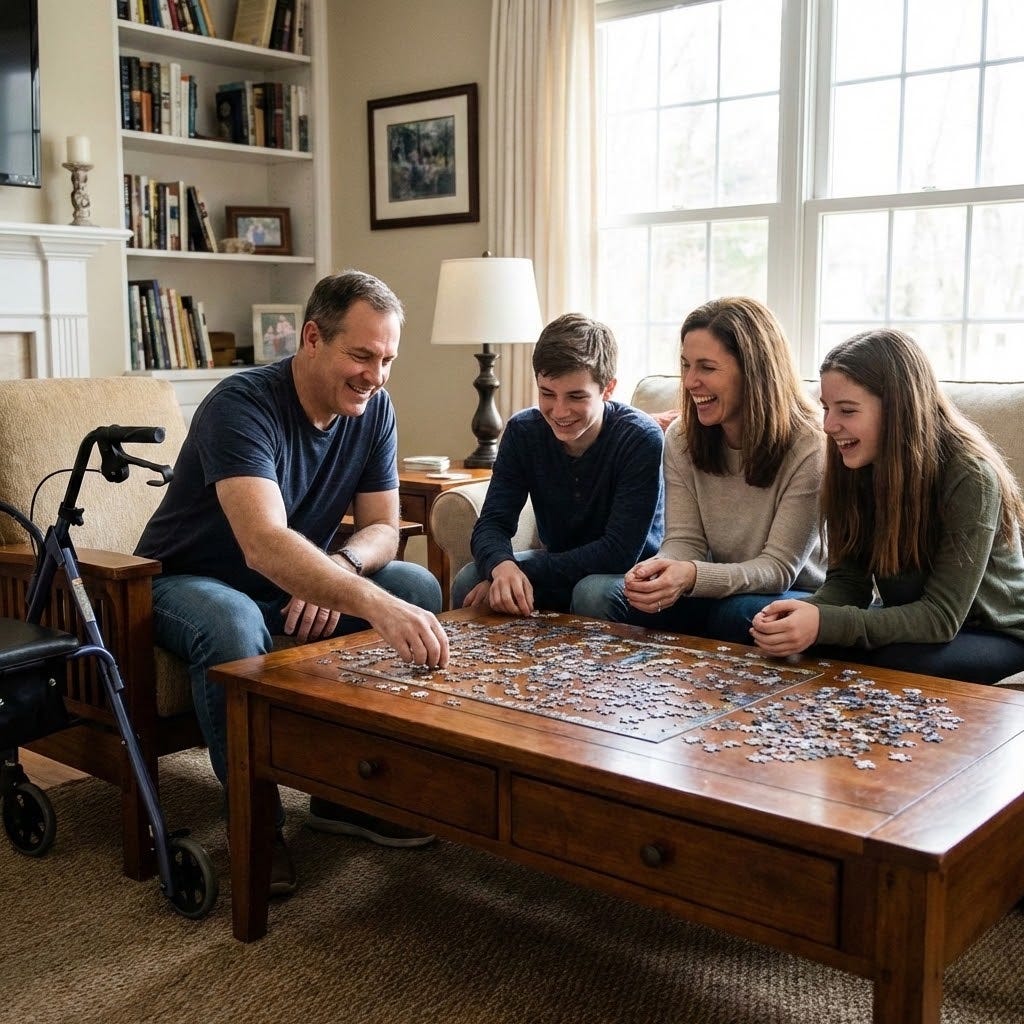
No single professional sees the whole picture.
The neurologist sees vascular risk.
The physical therapist sees movement patterns.
The occupational therapist sees functional barriers.
The speech-language pathologist sees communication gaps.
The psychologist sees grief and identity shifts.
The social worker sees environmental constraints.
The caregiver sees the daily lived reality.
Each brings a different lens.
Each holds a handful of pieces.
Together, they move the puzzle forward.
Stroke Recovery Takes a Team
Stroke recovery takes a team, just like completing a puzzle.
But not just a team that works in parallel.
A team that works in integration.
When disciplines operate in silos, pieces are assembled in isolation. Corners may look complete while the center remains fragmented.
Optimal stroke recovery demands:
Communication across settings
Shared goals
Longitudinal follow-up
Technology that connects rather than fragments
A roadmap survivors can see and understand
The puzzle needs both the pieces and the picture on the box.
The Long Journey
Recovery is not about snapping in one final piece and declaring completion.
It is iterative.
Sometimes pieces must be removed and repositioned and not forced to fit.
Sometimes progress stalls for months.
Sometimes the image changes as new goals emerge.
A survivor may begin focused on walking independently. Later, the focus shifts to returning to work. Later still, the priority becomes preventing a second stroke.
The puzzle evolves.
And that evolution requires patience.
When the Puzzle Feels Impossible
There are moments when survivors look at the table and feel defeated.
“I should be further along.”
“I’m tired of trying.”
“Maybe this is as good as it gets.”
These were thoughts I felt myself at different times while figuring out my own stroke recovery puzzle. In fact, if I’m being honest it’s probably why it has taken me so long to finally finish my book on recovery.
Here’s what I discovered on my journey, puzzles often look most discouraging right before a breakthrough. A cluster forms. A color field expands. Suddenly the image becomes recognizable.
Progress in stroke recovery can be similarly nonlinear.
Neuroplasticity does not operate on emotional timelines.
Behavior change does not follow motivation alone.
Support systems need reinforcement.
The key is not speed.
The key is sustained assembly.
Building a Better Stroke Recovery Puzzle
If we want better outcomes, we must:
Provide a clear picture of what recovery can look like.
Frame the borders early and deliberately.
Ensure no critical pieces are missing.
Encourage behavioral change with support — not blame.
Keep the puzzle visible, open, and collaborative.
The greatest tragedy is not that stroke recovery is complex.
The tragedy is when survivors are handed a pile of pieces and told to finish it alone.
Closure Is Not Perfection
Closure after stroke does not mean the puzzle is flawless.
It means the survivor understands the image.
It means the team has helped frame the borders.
It means missing pieces have been acknowledged and addressed where possible.
It means behavior change has been supported, not demanded.
It means the table remains open — not abandoned.
Stroke recovery is one of the most complex puzzles a human being can face.
But with many eyes, many hands, and a visible roadmap, image, or compass, even the most overwhelming scatter of pieces can become something whole.
And that is where hope lives — not in a single piece, but in the steady, collective work of putting them together. I’m working on a few more pieces in my puzzle. As I close out my journey, I’m not hoping for perfection, simply the piece of mind that I worked hard at building the puzzle and shared a roadmap to help others imagine what is possible in stroke recovery so they can start building too.
Today, I ‘BELIEVE in belief’ that you can build your own stroke recovery puzzle too.
If you missed my first chapter preview of my book, you can now listen to Chapter One: Power Play
