

Fitbit Air: A Possible Game Changer for Stroke Survivors Seeking Affordable Wearable Tech for Recovery Insights and Health Monitoring
BREAKING: Google just changed the rules of fitness wearables! What it could mean for the stroke survivor looking for an affordable tech enabled solution to help guide and measure recovery

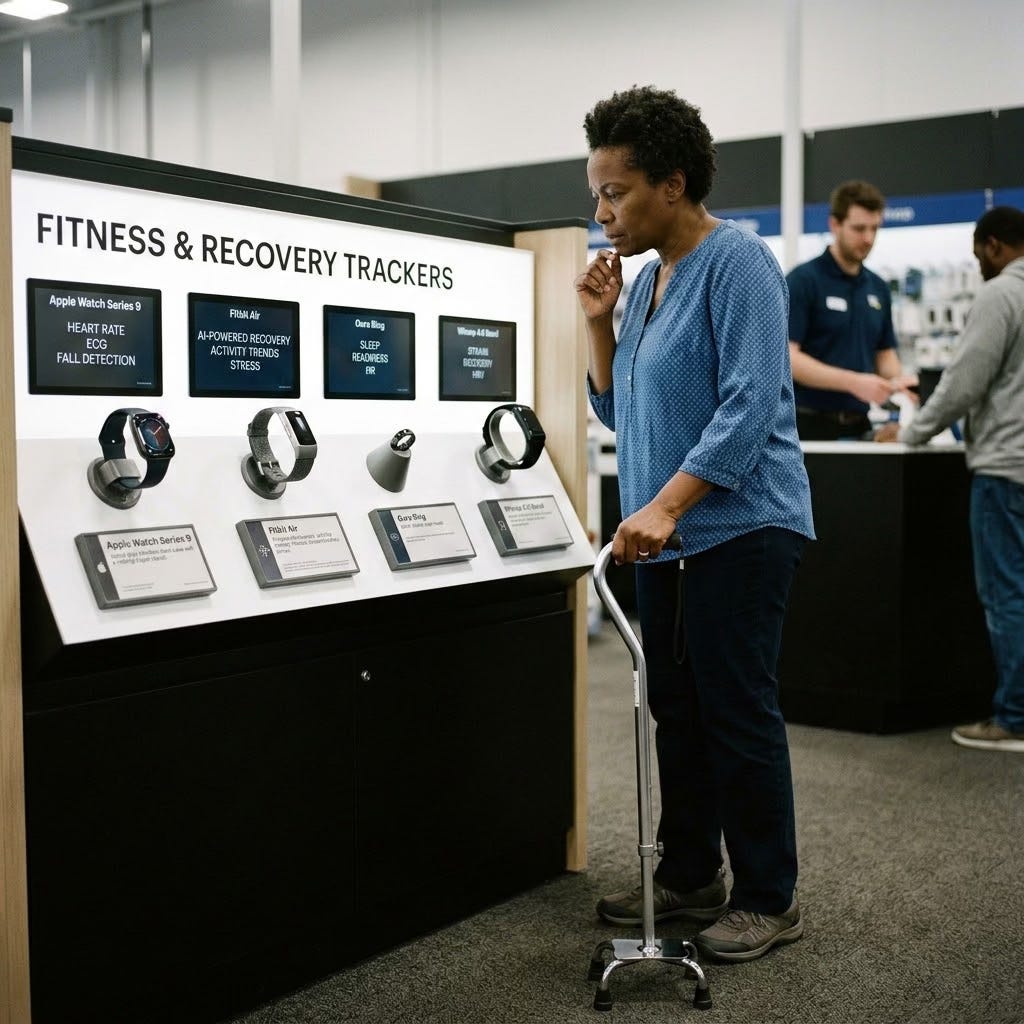
Google’s impending release of the $99, screen-free Fitbit Air, shipping May 26, is set to radically shift the fitness wearable market. More importantly, it may offer a breakthrough for stroke survivors seeking an affordable, tech-enabled solution to guide and measure their recovery. From my own research on this topic speaking with stroke survivors for my upcoming new book, cost had previously been a barrier to entry for using fitness and recovery trackers to support their health insights and wellness care.
The core strategy behind the Fitbit Air is clear: Google intends to “own the health data layer,” not just sell hardware. This strategy involves rebranding the entire Fitbit app to Google Health on May 19, creating a unified data layer that pairs with hundreds of apps, including medical records, on both iOS and Android.
For the stroke survivor, this approach offers several significant advantages:
Unprecedented Affordability: At just $99, the Fitbit Air is positioned as a disruptive, low-cost entry point compared to competitors like Whoop (requiring a $199–$359/year subscription) or the Oura ring ($349–$499 plus a $69.99/year membership). Affordability is crucial for making continuous recovery monitoring accessible.
The Power of AI Coaching: While core tracking remains free, Google Health Premium will feature paid-tier AI coaching. This AI-powered guidance could be invaluable for post-stroke rehabilitation, offering personalized metrics and progress tracking that goes beyond simple step counts. The value of timely, personalized health data in managing conditions like atrial fibrillation (AFib), a major stroke risk, has been previously highlighted by the potential of smartwatches to provide real-time heart rhythm monitoring.
A Unified Health Platform: The unified Google Health layer, connecting data from wearables with medical records and third-party apps, provides a holistic view essential for complex long-term recovery management.
Author’s Note and Disclaimer: While the Fitbit Air is an excellent proactive partner for tracking overall health, always consult with your neurologist, cardiologist, or physical therapist before starting new post-stroke exercise routines.
Disrupting the Competition
The Fitbit Air’s model—low-cost hardware paired with a free core software layer and optional paid AI—creates immediate problems for subscription-based competitors.
Whoop faces a significant “pricing problem” since its entire business model relies on a recurring subscription with no $99 entry point.
Oura, while a premium hardware brand, must now defend its subscription model against a free alternative from Google.
Will the survivors of this commoditization wave be those who built something entirely different and help support a stroke survivor’s data layer longitudinally?
These are recovery insights into the home that until this point, even skilled physical therapists and rehabilitation care teams can’t replicate.
Is a true home field advantage coming to condition and patient specific populations? After all, these insights and performance metrics have been the reasons touted previously that led to key partnerships for both Whoop and Oura, as ‘preferred partner and sponsor’ and athlete announcements from all things US Military, to USA Soccer, Tennis and the list keeps growing. To this point, nobody has built for stroke recovery optimization, and such as unique opportunity now exists.-David Daansereau,MSPT Know Stroke
Ultimately, Google’s bet is that ad-data-infrastructure economics will outweigh consumer subscription economics. For the stroke survivor, this means a powerful health data platform—complete with free core tracking—is now being commoditized and made accessible by one of the largest operating system owners. This move is a massive win for patient access to continuous, smart monitoring during the long journey of recovery. Could Google’s bet finally make tracking health more affordable and help give stroke care a long overdue breakout moment in how we support stroke longitudinally?
Here’s More From Google and Other Reference Technology Review Sites on What Metrics Will Be tracked with Google Fitbit Air
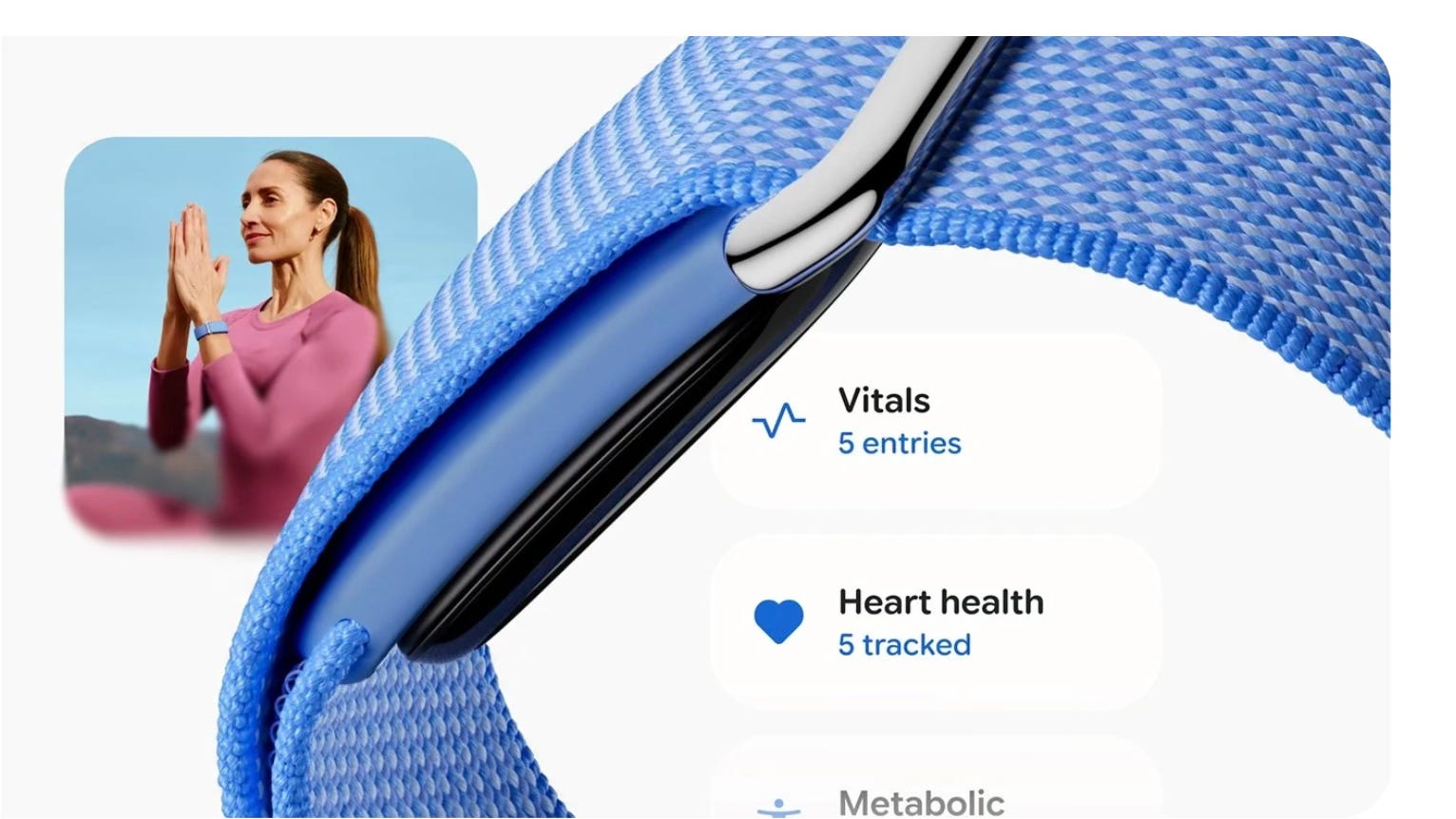

The Google Fitbit Air is an ultra-lightweight, screen-less fitness tracker that continuously collects a robust suite of background health and biometric data.
Its core wearable biometric sensors collect and track the following metrics, which sync via Bluetooth to the Google Health app:
Heart Rate: 24/7 continuous heart rate tracking, including heart rate zones during workouts.
Heart Rhythm (AFib): Background detection for irregular heart rhythms that may indicate atrial fibrillation (AFib).
Heart Rate Variability (HRV): Tracks the variation in time between each heartbeat to help measure stress and training recovery.
Blood Oxygen (SpO2): Uses red and infrared sensors to estimate your blood oxygen saturation levels while you sleep.
Skin Temperature: Tracks your wrist’s nightly skin temperature variations.
Breathing Rate: Monitors your average breaths per minute while resting.
Sleep Analytics: Details your sleep duration and segments your rest into light, deep, and REM sleep stages.
Motion & Activity: Built-in 3-axis accelerometer and gyroscope to track daily steps, distance, active minutes, calories burned, and automatic workout detection.
AI Health Insights
If you choose to use the optional Google Health Premium subscription, the device feeds this raw biometric data into a generative AI assistant that provides highly personalized workout plans, daily readiness scores, and tailored recovery suggestions.
Full Disclosure
I have no disclosures with Google, but certainly would like to partner with them if they want to help more stroke survivors gain access to their health data to improve outcomes. I also have preordered my own Fitbit Air and will be comparing it up against my Apple Watch for accuracy and all other features. Video to follow.
At first pass review of this new option for stroke recovery, it could offer affordable performance metrics that survivors need to help them reimagine what is possible in recovery.

References:
https://store.google.com/product/google_fitbit_air
https://support.google.com/fitbit/answer/17033101
https://techcrunch.com/2026/05/07/google-unveils-whoop-like-screenless-fitbit-air/
https://www.forbes.com/sites/andrewwilliams/2026/05/07/99-fitbit-air-screen-free-tracker-details-and-band-options/
https://lifehacker.com/health/the-fitbit-air-is-real-and-it-may-actually-be-a-whoop-killer
https://9to5google.com/2026/05/07/fitbit-air-launch/