


This is ‘Takeaway 2’ from my report on breaking down the data from my recent stroke support organization survey. In today’s focus piece it gets a ‘bit spicy’ because you’ll hear directly from the voices of those that are doing the toughest work, the leaders that try to keep stroke support throughout the US running on shoe string budgets.
In this deep dive we uncover the barriers to trying to find sustainable funding.
If you missed Takeaway 1 yesterday, you can catch up now or later here.
The Stroke Grant Funding Puzzle
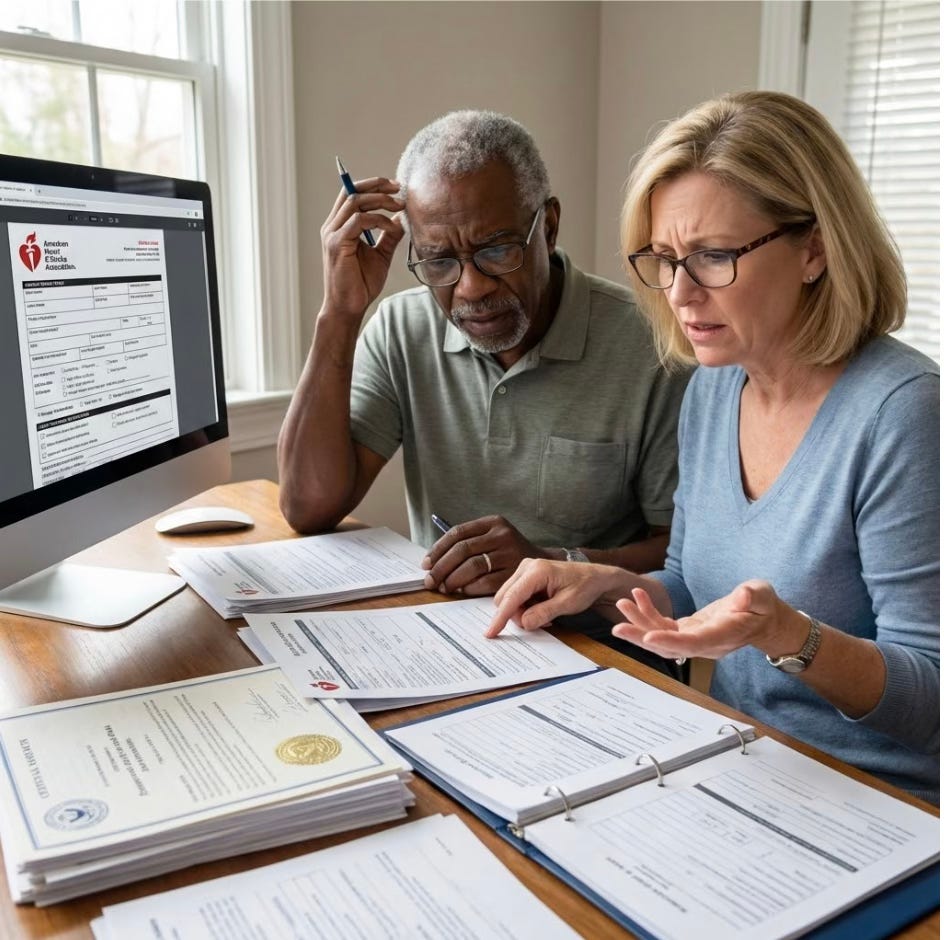
Surprisingly none (0) of the 24 stroke support organizations surveyed had been awarded a successful grant from the American Heart and Stroke Association (AHA/ASA).
When I asked responders in the stroke support survey -”What kind of support would help your organization be more successful in applying for AHA/ASA or other grants?”
Here’s a response summary of what they told me:
Administrative and Grant Application Support: Organizations need help with the grant writing process, including finding a volunteer or paid staff to handle the entire application, and desire administrative support.
Knowledge and Transparency: Requests were made for more transparency from organizations like AHA/ASA regarding grant qualifications and sustainability, as well as awareness about available grants, application strategies, and funding sponsors.
Funding Focus and Specificity: There is a need for AHA to offer grants for specific areas like pediatric hemorrhagic stroke, and a better explanation is requested for discrepancies between listed areas of need (e.g., balance restoration) and actual funding.
Time and Staffing: Having sufficient time and staffing resources is a significant factor in being able to successfully apply for grants.
Communication: Organizations desire better communication from funding bodies, such as having ASA respond to questions during the application process.
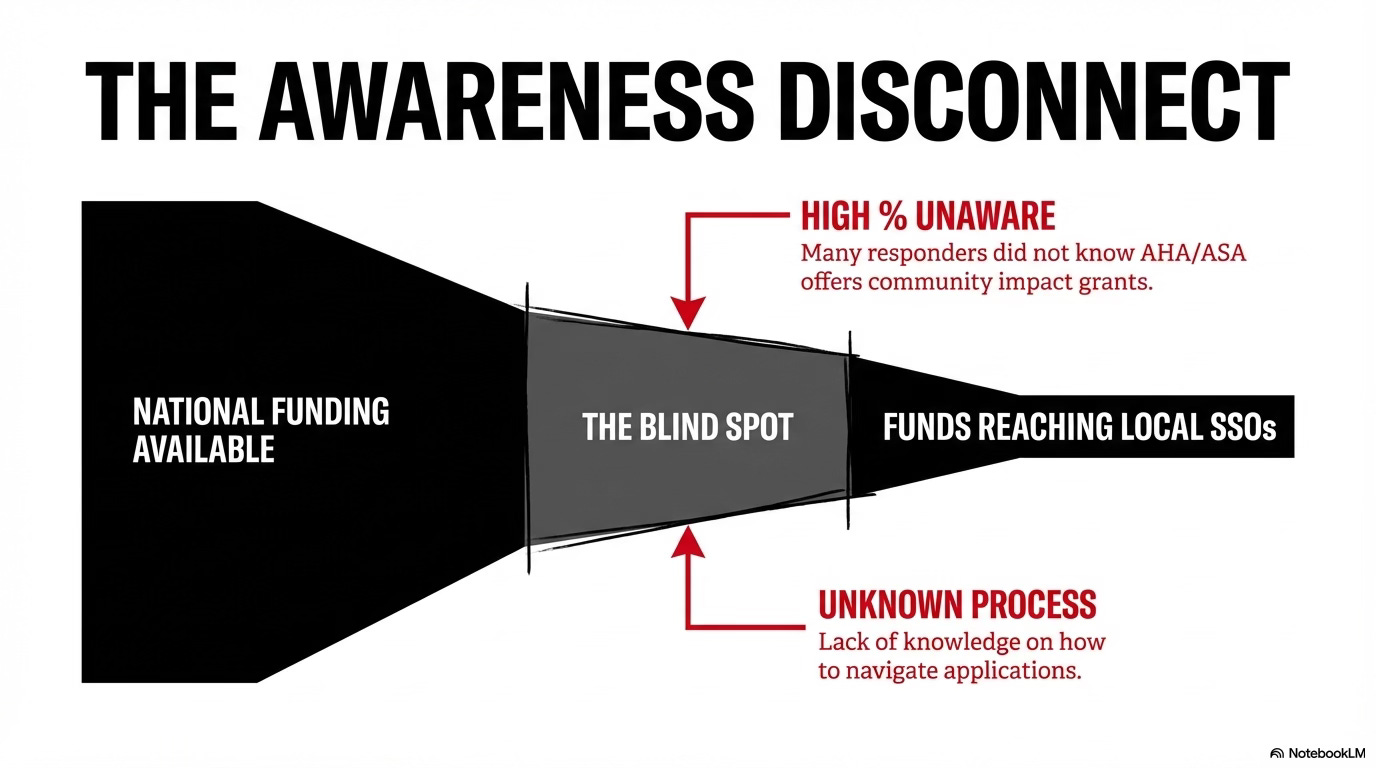
In the full report in my book Closure After Stroke we’ll talk about the funding awareness disconnect and the lack of awareness and support to navigate applications.
I’ll also speak to the 3 failed grant applications I attempted trying this pathway with the AHA/ASA and reasons I was told my applications were rejected, as well as hear deep dives from others who completed the survey here and also had rejected applications.
I’ve also reached out to AHA/ASA to see if they could offer help and examples of successful grant application awards but have not heard back to this point. This was part of feedback that survey responders wanted, ‘help us learn what works’.
This is where it gets ‘spicy’:
None of the questions on my survey were mandatory, so when I offered the following question to responders as an open ended response I honestly thought this box would be left blank. But instead, it indeed got a bit spicy.
The question read, ‘What advice would you give to the American Heart and Stroke Association (AHA/ASA) on how to best support Stroke Support Organization (SSOs) like yours?’
Here’s what they wanted to share (any names or identifying tags to an entity were protected/removed) while I keep this clean and constructive:
“Include us in your planning. Make the process easier. Do something that’s actually productive with all of the funds as you’re given instead of serving big Pharma.”
“complete statewide awareness campaigns to support us and involve us”
“Send us some help for planning events or allow us to offer our help to plan more in our area”
“awareness that these grants exist and examples of success stories of grant moneys already used.”
“Offer opportunities to listen to our needs, or provide community events our members can attend”
“Help us please we closed but the need is still great in our area- it is heartbreaking”
“Listen and learn from us, we are trying to meet increased community challenges. Many are now going underinsured and are going without services”
“Be more responsive and listen to the community you promote that you help, we tried”
“Coordinate regional events for this that can’t travel to ISC each year, costs and travel time are prohibitive or consider offering virtual options for stroke support groups”
“My advice is to shift more funding away from prevention toward long term support of the chronic stroke survivor. I won the ASA xxxxx xxxxxxx Hero award this year and reached out to multiple reps from the ASA asking if they would help me with finding funding and other tools to expand awareness and I received no response'“
“Make Grants and Awards Easier to find and enter!”
“We work hard to serve underserved populations so while it’s possible we wouldn’t qualify due to having secured too much funding - we’re working on a non-profit arm to support this mission. Could AHA/ASA support special projects?”
“Please reach out to be more responsive to our needs. We try to to our best work but I am a staff of only 2 part time trying to offer group and peer support on top of my other clinical role/admin and covering staff when out”
“understand us”
“Recognizing that a child can have a stroke just like an adult and 50% of those are Hemorrhagic AHA is currently ISCHEMIC and neonate based.”
“We need help, we can go to your website and certainly are always asked to donate on that site but can’t learn how to help our group receive support or awards to access technology or enroll in research to access the tech”
“Please update our stroke support group more regularly. We didn’t know there may be funding and grants we could be applying for to sustain our group and grow needed programs”
“Education and awareness regarding grants. Partnerships for community events.”
“Please let us know when resources are available and when grant cycles and deadlines are”
“Please help us with planning for sustainable programs and services”
“Other than your website to list my group I receive no help from your organization”
“Listen and respond to our needs PLEASE!”
“Step Up for Stroke! We have fundraised as a support group for your organization. We asked to simply have some of that money directed back into our programs and services, yet we never get response. Our members have stopped buying into the ‘fundraising’ theme you promote on your site but do not offer outreach or community support from those dollars donated.”
This feedback for me was, well to share the words from one other in the comments here, ‘heartbreaking’.
These groups are doing phenomenal work, yet they survive on shoestring budgets. I believe all but one responders input is included here because that one response I could not figure out how to clean it up enough to make it presentable without identifying, but I get their level of extreme frustration.
In my Ai deep dive slide deck of my data that was used to create a report summary for my book the image that expressed the combined frustrations of responders the best is this one:
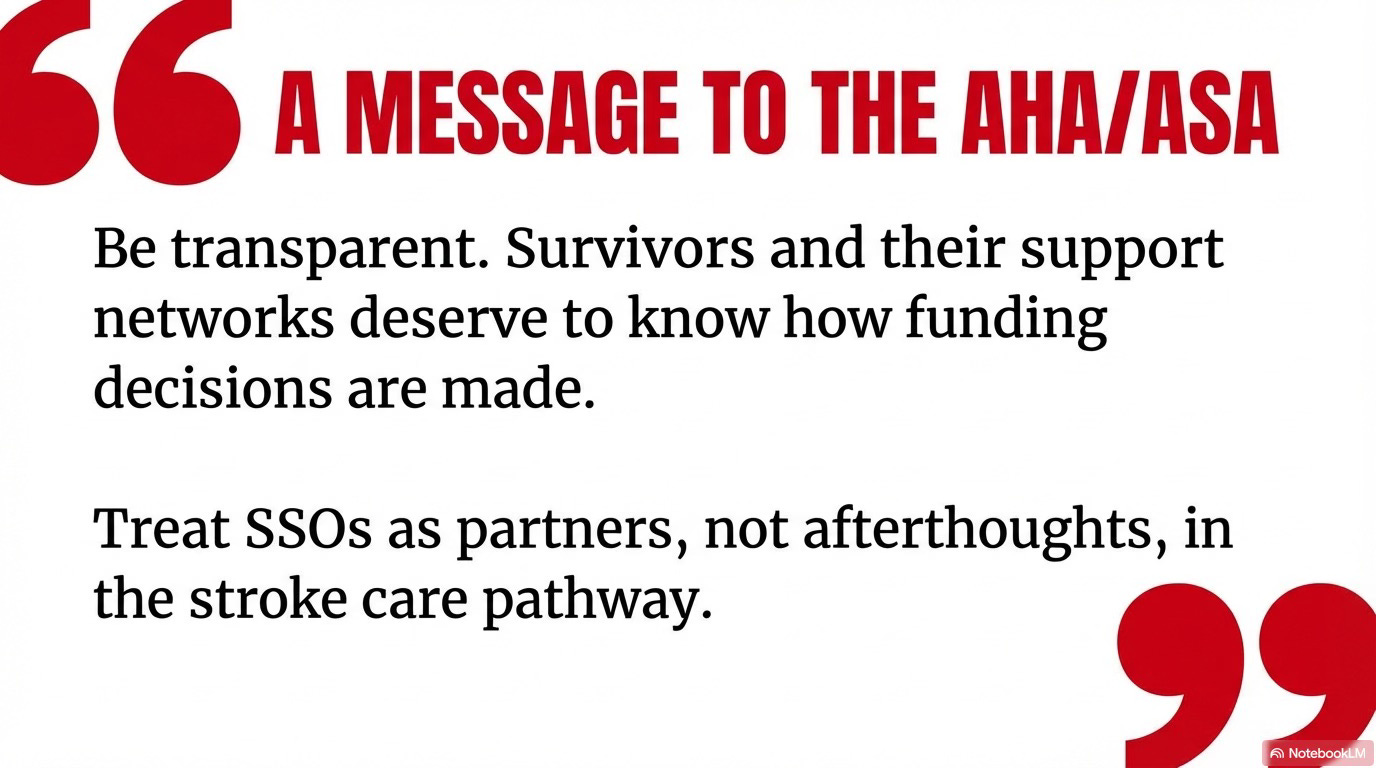
I think this quote rings true, we need more transparency, we have the data now. So how do we get more engagement?
We start by talking about it and sharing this report.
Next Steps:
I’m at step 2, I’ve published the data, now let’s build a plan to unite and advocate around it.
If you missed yesterday’s video with that outline click below or right here.

Thanks for reading and listening to this deep dive.
I hope you can now restack and share! OR add your comments below to join in on the conversation.

More posts on the stroke support survey:


